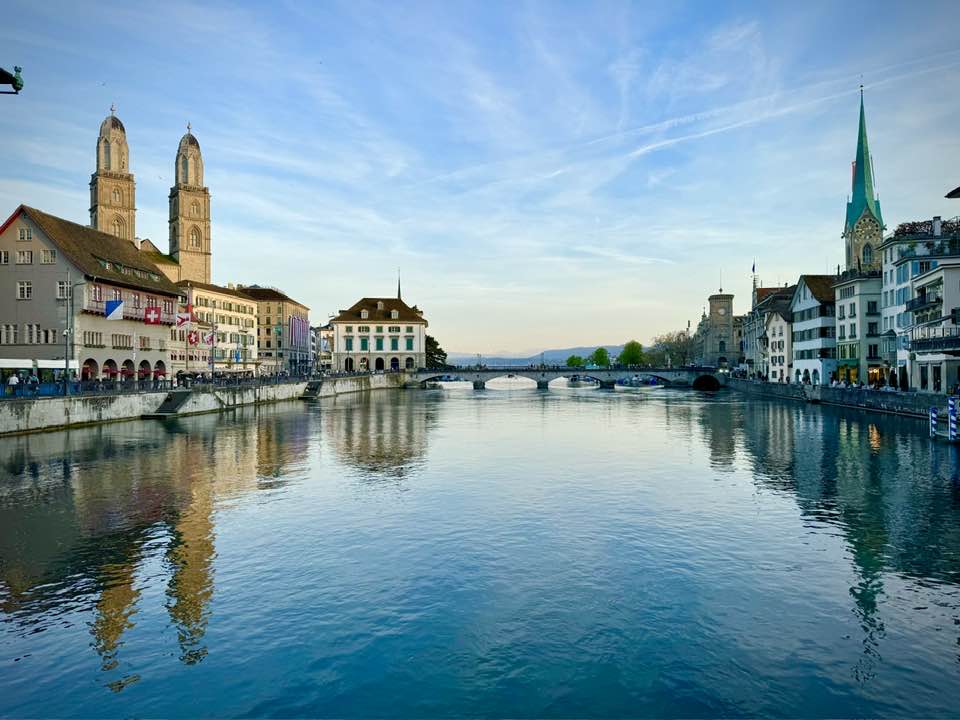
The Grossmünster Church Zurich
Grossmünster History and Visitor Information

The Grossmünster is Zurich’s most recognisable landmark and one of Switzerland’s most historically important churches. Rising above the Old Town and the Niederdorf quarter with its distinctive twin towers, the Grossmünster is not only a place of worship but also the spiritual and intellectual birthplace of the Swiss Reformation.
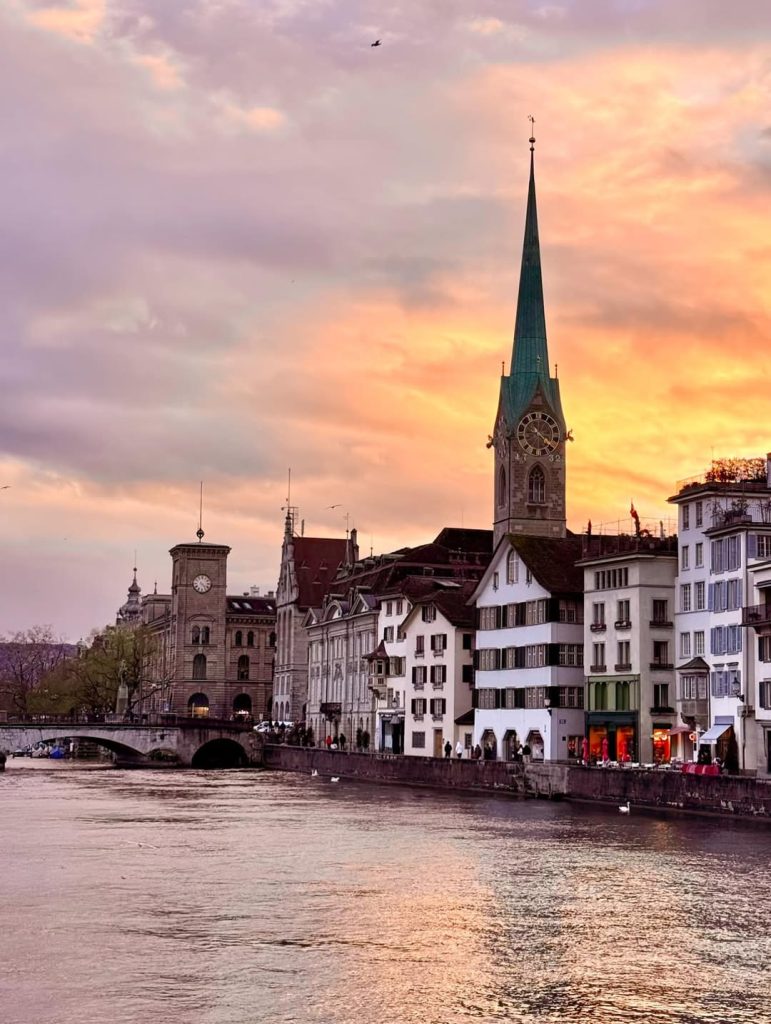
Fraumünster Zurich
Together with Fraumünster and St. Peter’s Church, it forms the trio of Zurich’s main historic churches, but it is the Grossmünster that has had the greatest influence on the city’s identity.
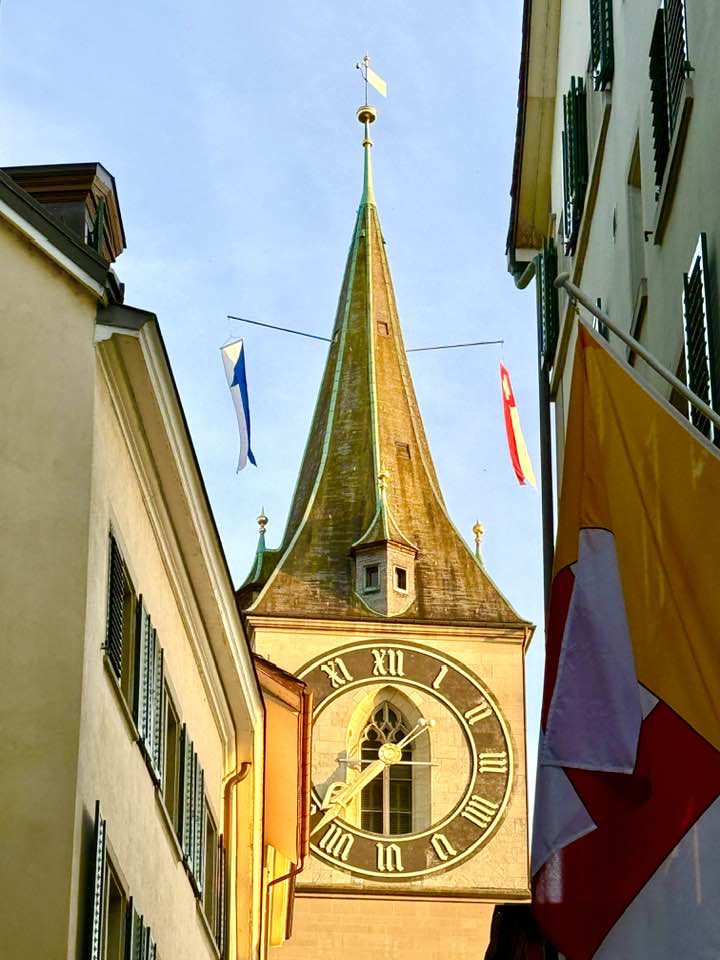
St Peter’s Church Zurich
Origins, Legends and Early History

According to medieval tradition, the Grossmünster was founded by Charlemagne in the early 9th century. Legend tells that his horse knelt at the site of the graves of Felix and Regula, Zurich’s patron saints, revealing their burial place.
Felix and Regula were members of the Theban Legion, a Roman Christian unit persecuted during the reign of Emperor Diocletian. After fleeing to Zurich with their companion Exuperantius, they were captured and executed in 286 AD for refusing to renounce their faith. According to legend, they were beheaded near today’s Wasserkirche, then miraculously picked up their heads and walked to the hilltop where the Grossmünster now stands, before burying themselves.

Wasserkirche Zurich
While this story belongs to the realm of fiction rather than historical fact, it played a powerful role in shaping Zurich’s medieval religious identity. Archaeological evidence confirms that the site was already of religious significance in late Roman and early medieval times.
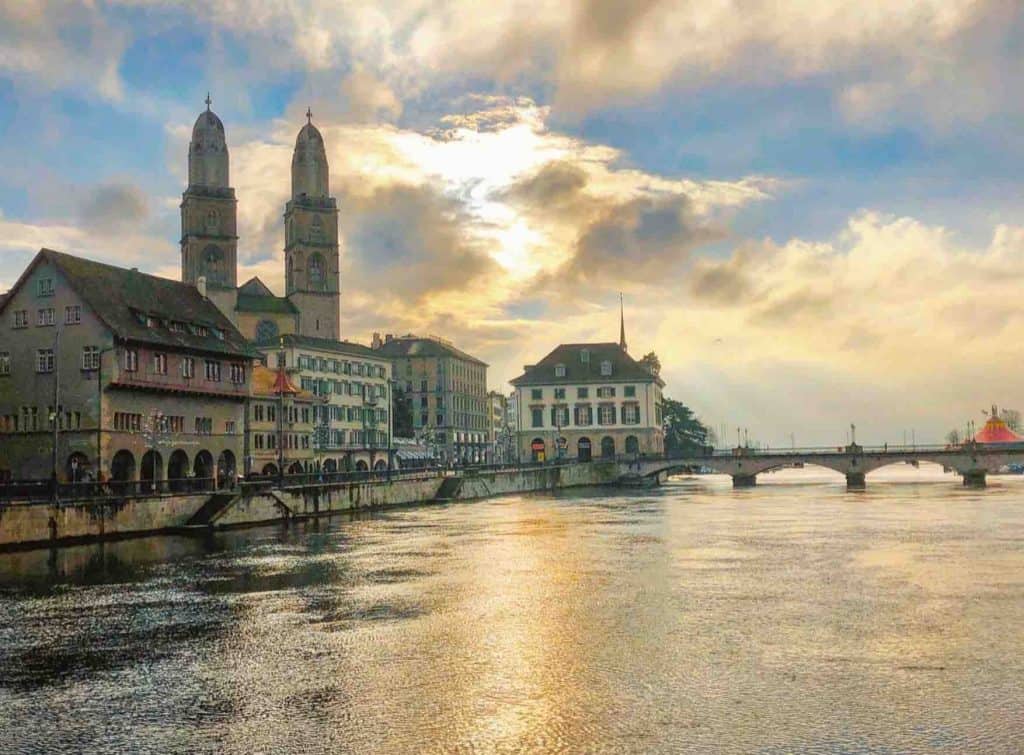 Construction of the present church began around 1100, and the building was completed in stages over the following two centuries, combining Romanesque origins with later Gothic elements.
Architecture and the iconic twin towers
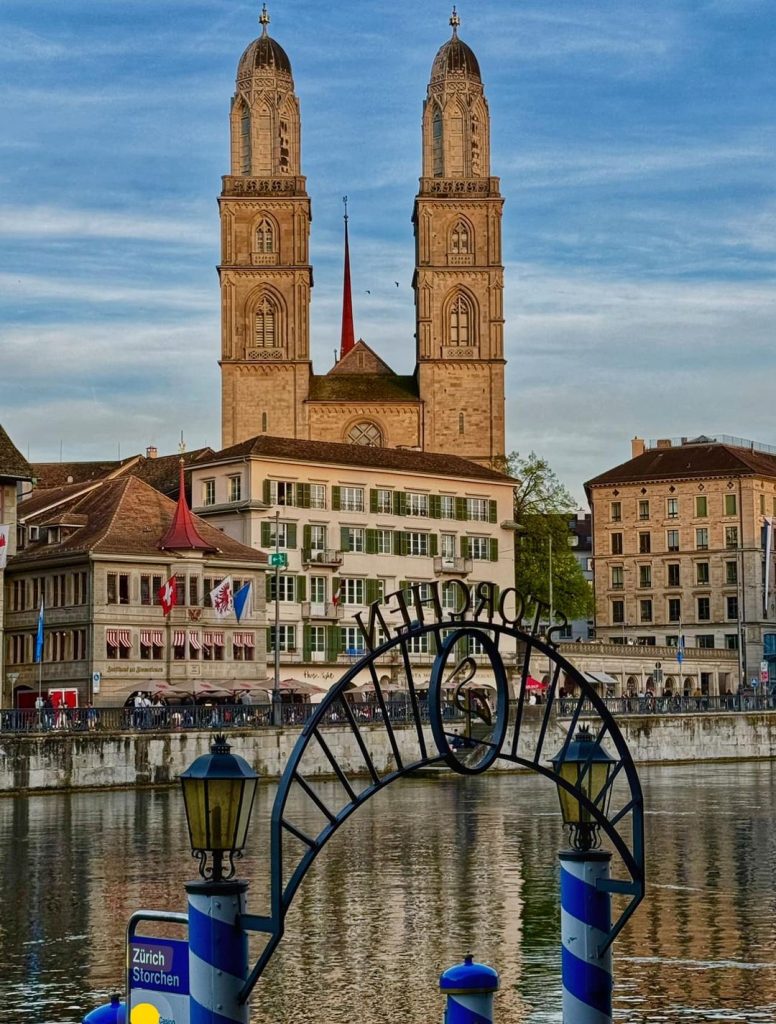 The Grossmünster’s austere stone exterior reflects its Romanesque roots. Its twin towers, known affectionately by locals as the “salt and pepper shakers”, dominate Zurich’s skyline. The towers were originally topped with pointed spires, which were destroyed by fire in the Middle Ages and replaced in the 18th century with the distinctive domed helmets seen today.
Inside, the church is deliberately restrained. Following the Reformation, decoration was removed to reflect Protestant ideals of simplicity, leaving a bright, spacious interior focused on the spoken word rather than imagery.
The Grossmünster and the Swiss Reformation
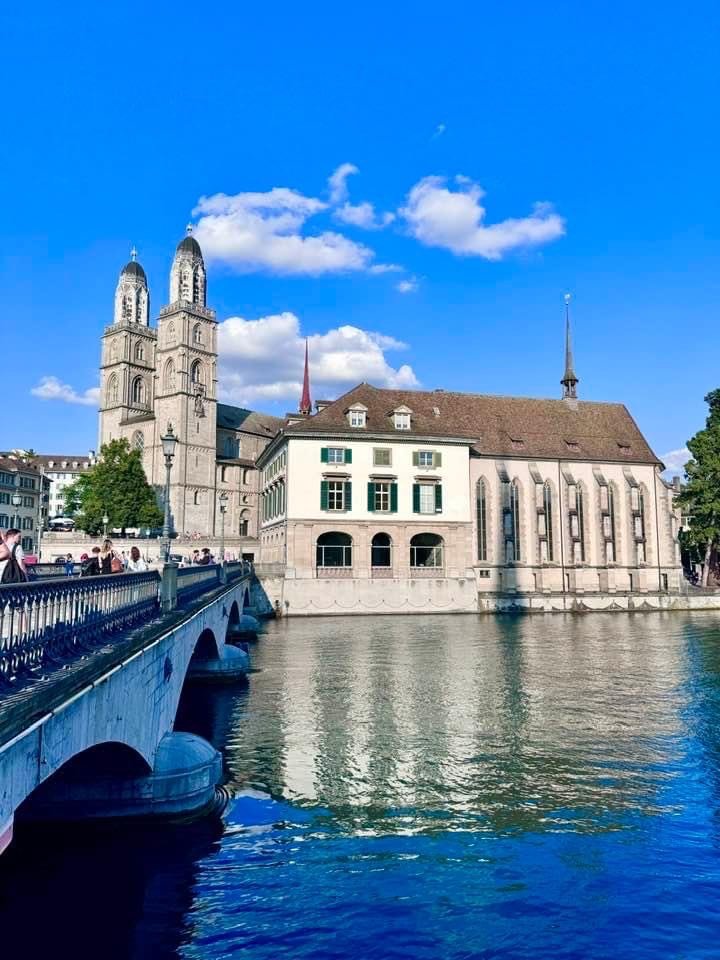
The Grossmünster occupies a central place in European religious history. In 1519, Huldrych Zwingli became pastor at the church and began preaching ideas that would lead Zurich to break with the Roman Catholic Church.
Zwingli rejected the authority of the Pope, criticised the sale of indulgences and emphasised the authority of the Bible. From the pulpit of the Grossmünster, his sermons sparked debates that transformed Zurich into the first Protestant city-state and helped shape Reformed Christianity across Switzerland and beyond.
Today, a statue of Zwingli holding a Bible and sword stands outside the church, underlining the Grossmünster’s enduring role in the city’s civic and spiritual life.
Stained glass and artistic features
Although its interior is largely plain, the Grossmünster contains some of Zurich’s most important sacred artworks.
The Sigmar Polke windows
In 2006, German artist Sigmar Polke won an international competition to design new stained-glass windows for the church. Installed in the nave, his seven contemporary windows are composed of thinly sliced agate stones, creating jewel-like surfaces that interact dramatically with natural light. Their abstract, layered imagery offers a modern counterpoint to the church’s medieval architecture.
Giacometti and Münch
In the choir, the stained-glass windows date from 1933 and were created by Augusto Giacometti, a key figure of Swiss modernism and uncle of sculptor Alberto Giacometti. Their warm colours subtly illuminate the altar area. The expressive bronze doors are the work of Otto Münch and depict scenes from biblical history, further enriching the church’s artistic heritage.
Karlsturm tower and panoramic views
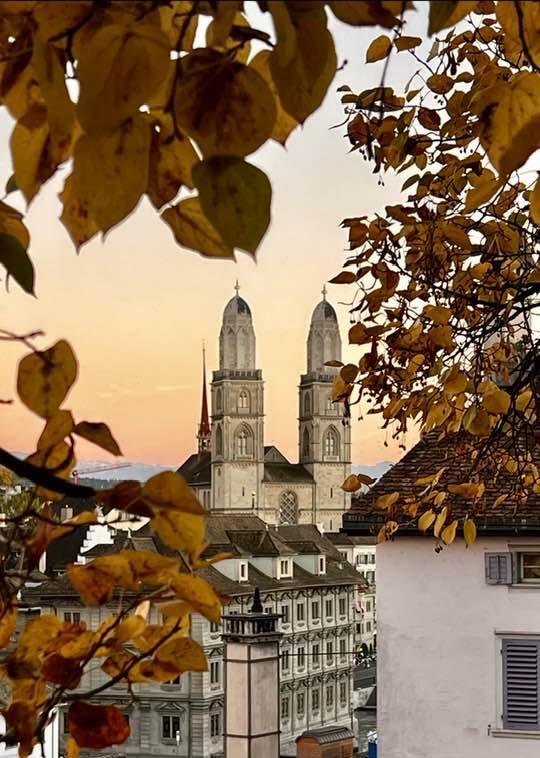
One of the highlights of visiting the Grossmünster is climbing the Karlsturm (Charlemagne Tower). A staircase of 189 steps leads to a viewing platform offering sweeping views over Zurich’s Old Town, the River Limmat, Lake Zurich and, on clear days, the Alps. The tower climb is ticketed separately and is weather-dependent, but it is widely regarded as one of the best viewpoints in the city although you are no longer allowed onto to balcony area. Please note that the stairs are very narrow and if you suffer from claustrophobia you may wish to skip this part.
Why the Grossmünster is unmissable
The Grossmünster is far more than Zurich’s most famous church. It is a place where legend, architecture, art and religious revolution intersect. From its Romanesque foundations and Reformation legacy to its contemporary stained glass and panoramic views, it tells the story of Zurich itself — past and present.
For anyone visiting Zurich, whether for history, culture or simply a deeper understanding of the city, the Grossmünster remains an essential stop. For more information on Zurich and its sights, take a look at our ultimate guide to Zurich Old Town here.
Practical visitor information
Opening hours of the Grossmünster
The Grossmünster is open daily, except during church services and special events.
March to October
Monday to Saturday: 10:00 – 18:00
Sunday: open after the morning service
November to February
Monday to Saturday: 10:00 – 17:00
Sunday: open after the morning service
Opening times may vary on public holidays or during special services.
Karlsturm Tower Opening Hours
The Karlsturm tower is generally open daily, with seasonal variations and weather-related closures. Tickets are purchased on site. Visitors should allow around 30–45 minutes for the tower climb and views.
With thanks to Jan de Boer for this article and for creating the video
Find out more about other Zurich Landmarks:
*** Articles You May Like ***
****************************